What do you have to do to get to apply for a writ of habeas corpus in a federal district court for a wrongful conviction? I'm going to be outlining the answer here instead of going into precise detail because a detailed answer would turn this blog post into a law review article or even a book. The answer is different depending on whether or not the wrongful conviction that you are seeking relief from is a state or federal conviction. If it is a federal conviction, you must exhaust your rights to appeal, and apply for your writ before a year of time has passed consisting of all the days that the conviction was final. This one-year period comes from the Anti-Terrorism and Effective Death Penalty Act. If it is a state court wrongful conviction you have to exhaust your state appeals, if any, and your state applications for a writ of habeas corpus, again before there have been 365 days of judgment-finality. The 28th volume of the United States Code chapter 153 has the federal habeas corpus statutes, and there are, additionally, special rules for these proceedings, which can be downloaded here.
As compared to the vast majority of state courts, federal courts are preferable for applicants because federal judges serve for life on good behavior and have other protections for their independence, where state court judges by virtue of their limited terms are creatures of politics. In many places, including Texas, they must seek their benches as partisan political candidates. It is far more common for a judge to lose a bench by being too even-handed between the State and the defense than to lose their benches by being too hard on crime-- making them favorable to the prosecution. A federal judge who angers the electorate keeps the bench and the pay for life.
About Me

- Bob Mabry
- Civil appellate, criminal appellate, and criminal trial lawyer at 704 North Thompson Street, #157, Conroe, Texas 77301-2578, (936) 494-1393.
Showing posts with label Court. Show all posts
Showing posts with label Court. Show all posts
Friday, January 4, 2019


Saturday, November 10, 2018
Come On in, the Water's Fine
I welcome my friends at Orgain Bell and Tucker LLP to the Texas Ninth Court of Appeals part of the blogosphere with their new blog, Navigating the Ninth, which I have put on our Link List, and wish them luck in helping to keep people informed about an important and neglected part of the Texas court system. The Ninth Court of Appeals covers ten counties:
- Hardin
- Jasper
- Jefferson- county seat Beaumont, where the Ninth Court of Appeals has its offices, courtrooms, and chambers- Jefferson is the second largest county in the Supreme Judicial District and is the primary home of Orgain Bell and Tucker LLP.
- Liberty
- Montgomery- county seat Conroe, the largest county in the Supreme Judicial District where I live and practice
- Newton
- Orange
- Polk
- San Jacinto
- Tyler
Monday, March 5, 2018
It's a Real Choice for the GOP Nomination for Presiding Judge of the Court of Criminal Appeals

Saturday, February 3, 2018
Sharon Keller's Done a Lot of Stuff and She's Doing a Lot of Stuff
Three seats on Texas's Court of Criminal Appeals will be contested in the fall. With the shriveling up of newspapers and fair-minded, even-handed news coverage on the internet, we're going to post information about all of the candidates.

Presiding Judge Sharon Keller runs for re-election. She grew up in Dallas, went to undergraduate school in Houston at Rice University taking a degree in philosophy. After that, she went to Southern Methodist University in Dallas and took a Juris Doctorate at Southern Methodist University. She worked for another attorney at first. Later she was a solo and spent some time working in her parents' family business. She got appointed for many criminal appeals and ended up an appellate prosecutor in the Dallas County District Attorney's office. She ran as a Republican before being a Republican was cool and won a seat on the bench in 1994. In 2000, she was elected Presiding Judge, and was reelected in 2006 and 2012. She has gotten through this most recent term without the challenges of her past troubles.
She is the candidate of experience in this race. The Presiding Judge is not only the senior jurist of the nine jurists, but she is the administrator of the court with its sizable budget and dozens of staffers. By virtue of her office she is the vice-chair of the Texas Judicial Council, the policymaking body for the Texas judiciary. She is the chair of the Texas Indigent Defense Commission. They grant money and develop systems to help with indigent criminal defense. They count the appointment hours private defenders of indigents serve, finance continuing legal education for indigent defenders, developed a way for indigent west Texas capital defendants to have a measure of choice in who their lawyers were, among other good works. She's also on the board of the Council of State Governments Justice Center which develop and popularize innovative law enforcement, judicial, and corrections policies. Although she chooses half of the members of Texas Department of Criminal Justice Judicial Advisory Council, and the Chief Justice of the Supreme Court of Texas chooses the other half. Chief Justice Hecht chose Presiding Judge Keller as a member.
Presiding Judge Keller said that she enjoyed the "extra-curricular" (ceremonial) parts of her job very much and didn't think, when she started the job, that she would enjoy that part so much.
She has only one opponent for the Republican nomination, David Bridges of the Texas Fifth Court of Appeals in Dallas. There is only one Democrat seeking the nomination of that party, Maria T. ("Terri") Jackson, judge of Houston's 339th Judicial District Court; her husband recently had cancer surgery. About Ms. Jackson, more in March.
Saturday, December 23, 2017
Can the Texas Legislature Give Someone a Break? Or Must It Follow Court Judgments?
This post starts with a Beaumont case we discussed in February, Roger Dale Vandyke v. State, 485 S.W.3d 507, (Tex. App.--Beaumont Feb. 10, 2016) pet. granted July 4, 2016. Now the Court of Criminal Appeals has reversed it. Roger Dale Vandyke v. State, __ S.W.3d ___, No. PD-0283-16, (Tex. Crim, App., Dec. 20, 2017) (Judge Newell wrote the opinion joined by Presiding Judge Keller, and Judges Hervey, Alcala, Richardson, Keel, and Walker.).
Vandyke had been civilly committed as a sexually violent predator, and was convicted of failing to progress in sexually violent predator treatment and received a sentence of 25 years for that. But, afterwards, a new law was enacted in Act of May 21, 2015, 84th Leg., R.S., ch. 845, § 13, 2015 Tex. Gen. Laws 2700, 2704. The Legislature amended section 841.085 to limit prosecution to violations of civil commitment requirements under subsections (1), (2), (4), and (5). Id. Thus, under the amended statute's plain language, failure to complete sex offender treatment is no longer a basis for prosecution.
Section 841.085's limitation on prosecution applies to an offense committed before, on, or after the amendment's effective date, “except that a final conviction for an offense under that section that exists on the effective date of this Act remains unaffected[.]” Act of May 21, 2015, 84th Leg., R.S., ch. 845, § 41, 2015 Tex. Gen. Laws 2700, 2711.
Isn't Vandyke's conviction not final?
if Vandyke's conviction is on appeal, then the State (and the Beaumont Texas Ninth Court of Appeals) is going to say that his conviction is not final.
Can the Legislature "undo" a conviction by changing the law?
The Court of Appeals says "No."
There are two oddments of Texas legal history that explain why the Court of Appeals's opinion is twelve pages long and the Criminal Court of Appeals's opinions (Judge Yeary wrote a dissent that Judge Keasler joined.) total 41 pages.
- Governor James E. "Pa" Ferguson granted 1,774 pardons and 479 conditional pardons between 1915 and 1917. Pa was forced to resign in 1917. When his lieutenant governor Mr. W.P. Hobby, succeeded him, Hobby granted 1,319 pardons and 199 conditional pardons between 1917 and 1921, , Governor Miriam A. "Ma" Ferguson granted 384 pardons and 777 conditional pardons between 1925 and 1926. This led to a demand to curb the governor's pardoning power, and in 1936 the constitution was amended so as to create a constitutional Board of Pardons and Paroles, and to limit the clemency powers of the Governor by providing that in all criminal cases except treason and impeachment, the Governor should have power, after conviction, “on the written signed recommendation and advice of the Board of Pardons and Paroles, or a majority thereof, to grant reprieves and commutations of punishment and pardons.” The Governor may grant one reprieve, not to exceed 30 days, in a capital case without action of the board.
Tex. Const. art. IV, § 11, Interpretive Commentary
2. The branches of the government of the State of Texas have a history of struggling with one another." " . . . [N]one of the three governmental branches 'shall exercise any power properly attached to either of the others, except in the instances herein expressly permitted.' Tex. Const. art. II, § 1" (Beaumont Vandyke at 5).This separation of powers clause is violated in one of two ways: (1) “when one branch of government
assumes, or is delegated, to whatever degree, a power that is more ‘properly attached’ to another branch[;]” and (2) “when one branch unduly interferes with another branch so that the other branch cannot effectively exercise its constitutionally assigned powers.” Armadillo Bail Bonds v. State, Armadillo Bail Bonds v. State, 239 (Tex. Crim. App. 1990). (Beaumont Vandyke at 5, again). Citing Ex parte Giles favorably , 502 S.W.2d 774 (Tex. Crim. App. 1973), Beaumont accepts the State's contention that by amending the statute to decriminalize certain conduct, the Legislature “improperly assumed the executive branch’s clemency power.”
In the Court of Criminal Appeals, Judge Newell cited cases in which the Legislature changed statutes and thereby decriminalized actions: Williams v. State, 476 S.W.2d 307, 309 (Tex Crim. App. 1972); Mendoza v. State, 460 S.W.2d 145, 147 (Tex. Crim. App. 1970) Cox v. State, 234 S.W. 531 (Tex. Crim. App. 1921) (noting that a statutory amendment removing the act of possessing equipment for making intoxicating liquor from the forbidden conduct in a penal offense constitutes a repeal of the law under which the defendant was convicted).
Austin's dissenters accepted Beaumont's argument that not following through on punishing Vandyke would be to pardon him-- a thing that no Texas court can do.
Note One- When Presiding Judge Sharon Keller-- my fellow philosophy major-- gives her vote to a defendant-appellant-petitioner: that is noteworthy, and seems to me to be a sign on first face that that petitioner's case is strong on the merits. She has a history of liking the State's side very much.
Note Two- There is an unsung hero here, my fellow Conroe criminal trial and appellate lawyer Scott Pawgan, truly an absolutely first-rate attorney. He boldly and cleverly argued the merits of the 2015 amendment to a hostile Beaumont Court of Appeals which rejected his arguments, but which Pawgan used to persuaded seven out of nine CCA judges, even the super-hard-to-sell Presiding Judge. A lesser advocate might well have failed.
Monday, October 2, 2017
U.S. Supremes Not Coming to Rescue Civilly Committed Sex Offenders, at Least, not Soon
United States Supreme Court announced today that it would not hear a case concerning the constitutionality of Minnesota's sexually violent predator law. The committed people won in the trial court, the State of Minnesota took it up on appeal to the United States Court of Appeal for the Eighth Circuit, which overturned the trial court. The committed people had asked the United States Supreme Court to hear it, but the high court did not. With very few exceptions, SCOTUS gets to choose the cases it wants to hear. About 7,000 to 8,000 cases are brought to SCOTUS each year that someone wants them to hear. About 80 get the full treatment-- merits briefing and oral argument, and about a 100 get some kind of ruling without oral argument, etc. The chances of SCOTUS taking any case in particular is a little more than one out of a hundred.
Today, the first Monday in October, is the beginning of the court's term for this year. The Justices' main holiday is from the end of May to September. You may ask what do the Justices do in September before the official beginning of the court's term. What they do is prepare and have the Long Conference. The Justice meet together most Fridays to choose what cases to hear and which justice will supervise the writing of court's opinion in each case. But they don't have such meetings over their summer vacation. When they come back, they have about three months' requests for cases to be taken, and they get rid of those summer requests in one long meeting-- the Long Conference in September.
On that first Monday in October, SCOTUS announces that it is taking or refusing to take about one-third of the cases for the year.
The Beaumont Court of Appeals is still responsible for far more of the appeals of sexually violent predator civil commitment matters than the other courts. If SCOTUS had taken the Minnesota case mentioned above, SCOTUS could have decided to make major changes in that law that would have affected every state, including Texas. But those old rivers, the Potomac and the Neches will likely keep on flowing the way they always have, at least for another year.
Tuesday, August 29, 2017
Texas Court System's Adaptation to and Beaumont's Ninth Court of Appeals's Closing for Tropical Storm Harvey
Texas's Supreme Court and Court of Criminal Appeals have encouraged state courts to be lenient with people suffering delays because of Harvey-- more than a few people are trapped in their homes and won't be able to get out for days. Beaumont's Ninth Court of Appeals's appears to have closed Friday, August 25, 2017 at five PM and will not open until further notice.
Tuesday, November 8, 2016
Things Could Be Different

Mark W. Bennett caused part of the statute against improper relationship between educator and student to be held to be unconstitutional on the ground that non-obscene materials that concern sexuality may well be appropriate objects of study, and disallowing communication about them is a content-based restriction on protected speech. Examples would be "The Rape of the Sabine Women,“ the "Venus de Milo," ancient Greek myths concerning the sexual prowess of Zeus and Renaissance ribald plays (I noticed that there was no mention of the Bible-- the end of the story of Noah, Lot's daughters, the Song of Solomon, etc.).
Bennett proposes to make lawyers work harder-- he believes CCA judges are afraid to find ineffective assistance of counsel when defense lawyers give it and are afraid to recognize pleadings that do not state a cause of action, when prosecutors write them.
Many law students and young lawyers, when they first encounter criminal practice are struck how much the State seems to always be fighting from the high ground. The criminal laws that are important on a day-to-day basis favor the State, either directly or by effect. And on top of that, judges who use their considerable discretion to practically always favor the State tend to be rewarded by the electorate rather than punished. Bennett appears to find this scandalous, and wishes to show that the status quo is not inevitable, it is what the electorate votes for. People could vote for something different.
Saturday, October 15, 2016
Retired Ninth Supreme Judicial District Appeals Justice Dies

McNicholas was born in Marinisco, a tiny logging village on the Upper Peninsula of Michigan, a tiny village near the Wisconsin border on April 23, 1918. He got his undergraduate degree and law degree from the University of Michigan. Before his last year of law school, he served as a Captain in the Third Army during World War Two and served under George Patton. He received his law degree in 1948. He was admitted to the Michigan bar in 1948 and the Texas bar in 1949. McNicholas was admitted to practice in all Texas state courts and the United States District Court for the Eastern District of Texas as well as the United States Court of Appeals for the Fifth Circuit. He is a member and past president of the Jefferson County Bar Association, as well as a member of the Texas Association of Defense Counsel.
Judge McNicholas practiced law in Beaumont for sixty years. Most recently he was of counsel at Germer, PLLC. He was Mayor of the City of Beaumont from 1968-1970 and was a Board Member of Jefferson County Drainage District Six at his death.
Funeral services will be held at 11:00 a.m. on Monday, October 17, 2016, at St. Andrew’s Presbyterian Church, 23rd and Gladys, Beaumont, Texas. Our condolences go to his family.

Friday, October 14, 2016
Dallas Court of Appeals Justice Resigns in Lieu of Facing Removal Proceedings
David Lewis, a justice on Texas's Fifth Court of Appeals in Dallas, resigned just as removal papers were filed against him with the Texas Supreme Court on Tuesday. Lewis suffered from alcoholism and depression and had been suspended without pay since September 2014. According to the records of the Texas Commission for Judicial Conduct quoted in the Dallas News blog of the Dallas Morning News, Lewis was "erratic, hostile and threatening." A doctor chosen by the Judicial Conduct Commission reported that Lewis's problems began as early as 2013 and that a scan of his brain in 2015 is of a person who is experiencing decreased cognitive function and is trying to cover that up.
Governor Abbott will appoint a person to fill Lewis's seat on the bench until his term ends in 2018. Lewis is a Republican. Texas's Fifth Court of Appeals is the state appeals court for Collin, Dallas, Grayson, Hunt, Kaufman, and Rockwall counties.
Hat tip to the Texas Lawyer newspaper's online bulletin.

Saturday, October 8, 2016
Justice by the Book, Not by the Sound Bite

He came to live in north Dallas when he was 5 years old, graduated from Richardson High School, then my alma mater Austin College in Sherman, a long hour's drive north of Dallas. He's a 1990 diplomate of Southern Methodist University.
His Republican adversary is Judge Michael Keasler.
He has a strong court management record, and has a strong reputation for attention to detail in his work.
Thursday, July 21, 2016
All the Time in the World to Claim this Error
Many's the post in this blog that has emphasized the importance of preserving error before you can get it reversed in an appeals court. Texas Rule of Appellate Procedure 33. That is, generally, you must clearly inform the trial judge as to what your complaint is in time for the judge to correct the error. And if you do not do so, you cannot complain of the error on appeal. There is one huge exception to this rule, and that is a complaint that a court lacks subject-matter jurisdiction. We've already discussed the importance of making sure that the court you want to appeal to has subject-matter jurisdiction of your case. , a complaint you can make at any time up to the mandate's becoming final--even then, a habeas corpus writ complaining of it would likely prevail. The same principle applies to if it the trial court that lacked jurisdiction.
There is a story about this point of law. I believe it to be apocryphal.
As a general rule, the people who have been arrested in the last 24 hours are brought before a judge, usually called a magistrate,
This is a joke. The trial judge would not have pursued the punishment he pronounced. But the lawyer for the anti-social Thunderbird person's complaint that the court did not have subject-matter jurisdiction for the judgment, could never be held to be too late as long as the accused was still alive.
There is a story about this point of law. I believe it to be apocryphal.
As a general rule, the people who have been arrested in the last 24 hours are brought before a judge, usually called a magistrate,
- One job of the magistrate is to listen to one or more prosecutors explain why the State believes the accused probably committed an offence and what offence the State believes it is. This is practically always a pure formality. An arresting officer gets approval to arrest and a designated charge from talking with a prosecutor from the scene of the arrest over radiophone.
- The magistrate also reads the accused his or her rights again.
- Magistrate sets bond or makes a finding that no bond will be set.
- Magistrate asks the accused if he or she claims to be indigent, and, if so, sets up the process for the accused to be interviewed to determine whether or not the accused is eligible for counsel to be appointed at no charge to the accused.
This is a joke. The trial judge would not have pursued the punishment he pronounced. But the lawyer for the anti-social Thunderbird person's complaint that the court did not have subject-matter jurisdiction for the judgment, could never be held to be too late as long as the accused was still alive.
Monday, July 18, 2016
Texas State Criminal Appellate Court Costs
In a criminal appellate court proceeding, except in cases in which a presumption of indigence has been established as provided by Rule 20.1(a)(3), a petitioner must file an affidavit of indigence in the court in which the proceeding is filed, with or before the document seeking relief. A respondent who requests preparation of a record in connection with an appellate court proceeding must file an affidavit of indigence in the appellate court within 15 days after the date when the respondent requests preparation of the record, except in cases in which a presumption of indigence has been established as provided by Rule 20.1(a)(3).
When written notice of appeal from a judgment or order in a habeas corpus or bail proceeding is filed, the trial court clerk must prepare and certify the clerk’s record and, if the appellant requests, the court reporter must prepare and certify a reporter’s record.[1]
The court may make an appropriate order relating to costs, whether allowing costs and fixing the amount, or allowing no costs.[2]
Wednesday, July 6, 2016
Required Changes in Texas Criminal Law Filings Beginning July 1, 2017
Electronic filing is already required in the Texas Court of Criminal Appeals and Texas Courts of Appeal for parties represented by lawyers under Texas Rule of Appellate Procedure 9.2(c)(1) and (2). Now it's going to be required in district courts, county-courts-at-law, and constitutional county courts for those represented by lawyers.
(What's the difference between a county-court-at-law and a constitutional county court you ask? The Texas Constitution sets up a default, skeleton set of county offices-- the minimum needed, and then the legislature can establish extra offices for those counties big enough to need them. In large counties, even ones as small as my Montgomery County, the title of the chief executive of the county is County Judge. The county legislature, which also has a number of executive powers, is called the County Commissioners' Court, which the County Judge presides over, but the County Judge doesn't hold a judicial court or preside over any true judicial proceedings. The judicial powers of the County Judge in such a county are reposed in one or more county-courts-at-law established by the legislature. Montgomery County has five; Harris County-- the largest-- has 20-- 16 criminal and four civil-- and additionally, four probate courts-- which have a mix of county-court-at-law powers and state district court powers. In a tiny rural county, like Matagorda County where I used to live, the County Judge actually has judicial powers as well, holding court about some civil matters and also holding court on misdemeanors and also hearing cases appealed from justice courts, municipal courts and small claims courts, the latter three courts being the lowest level courts in the state. The buildings and the judges and the court staff for justice courts are the same as for small claims courts.)
Electronic filing will be mandatory in criminal cases in the district courts, statutory county courts, and constitutional county courts according to this schedule based upon the counties' 2010 Federal Census population:
a. Courts in counties with a population of 500,000 or more- July 1, 2017
b. Courts in counties with a population of 200,000 to 499,999 - January 1, 2018
c. Courts in counties with a population of 100,000 to 199,999 - July 1, 2018
d. Courts in counties with a population of 50,000 to 99,999- January 1, 2019
e. Courts in counties with a population of 20,000 to 49,999 - July 1, 2019
f. Courts in counties with a population of less than 20,000 - January 1, 2020
Municipal courts and justice courts will not have to change, except that if they accept any electronic filing they have to follow the rules that the higher courts use (Small claims court has no criminal jurisdiction.).
Pro se litigants will still be able to use paper. Some of them will be on the wrong side of the digital divide. Other are locked up and authorities don't want to give those people access to internet-enabled computers.
Sunday, February 14, 2016
What is a "Friend of the Court" Brief?
"Amicus curiae" is the Latin term. "Amicus" means "a friend." English cognates include"amicable" and "amity." "Curiae" means roughly "of a court." English cognates include "curator," a person who judges [as in a court] which items should be in an art gallery or museum. Much has been made in recent news about the "Curia" of the leader of the Roman Catholic Church, the Pope-- the Curia is his court as a king has a court.
More than one friend are "amici." Ordinarily the only people who can participate in a lawsuit are people that either want a court to act in some way or people who oppose a court's action in some way. In a suit over money, the only people who can ordinarily participate are the people who have submitted to the court's jurisdiction who either desire to get money from one or more other parties or who wish to keep their money from the other party.
Generally, particularly in appellate disputes, a court can give permission for one or more additional parties to file briefs in a case or even present oral argument.
Imagine that a dispute about a small amount of money depends on an interpretation of the United States Constitution. The plaintiff: Gimpel the Fool

represented by

Here is the defendant, Gervais Brooke-Hamster


represented by R.L Gumby, Esq., attorney at law.
Now, generally, when appellate courts decide cases, they not only rule on the dispute, but they make a rule to be followed that will be applied in all cases before them thereafter. Appellate justices are hardly ever experts on the distant, long-term effects of their rule-making-- especially as to specific industries, intellectual property or taxes. The court needs help to decide the case rightly, and, more importantly, to make good rules that won't pointlessly screw up the economy.
Shyster and Gumby, though, are clearly not the people for the job. Commonly lobbyists keep track of the cases appearing before the high courts that could affect their interests, and advise their clients to petition the court for permission to act as amici curiae, and hire first-rate lawyers to add briefs to help explain the context of the dispute. There may even be rare instances in which one or more high court justice might ask a buddy or a well-recognized expert in a field to act as an amicus.
Criticism of amici and their briefs:
- Amici often have vested interests and distort the litigation process. Trade associations and other businesses can fairly well count on their interests being considered in litigation, the public not so much.
- In states like Texas in which justices are elected, trade associations and other businesses finance the campaigns of candidates who will likely support their interests once the candidates rise to the (higher) bench. Sometimes it seems to me that in such cases, amicus briefs just add insult to injury. This is not so much a problem in courts in which the judges do not face the voters later. Those judges need not fear serious harm for ruling against vested interests. As segregation died, white southerners wanted to impeach Earl Warren. Many federal judges ruled in favor of school integration, improving the conditions of prisons, even requiring that criminal convictions be overturned because peace officers just plainly ignored the civil rights of poor people, racial minorities, and nonconformists.
- Sometimes one or more friends of the court will be closely allied to one of the parties and all the folks on one side of a matter, and the party desperately desires to cover more material in its brief than the word count allows. That party and one or more amici will connive so as to spread an overly long argument over all their briefs to beat the page count.
Wednesday, February 10, 2016
A Hard-Working Second-Career Appellate Lawyer and Courtroom Litigator Seeks Place Five

So far we've spoken about three of the Republicans seeking to replace the retiring Cheryl Johnson: Sid Harle, Steve Smith, and Brent Webster, which only leaves Scott Walker.
An honors graduate of Dallas Baptist University and a Baylor law grad., he was admitted to the bar in 1998. A born Texan, he claims that he comes from generations of conservatives, and has been a Republican all of his adult life.
He has had a first career that he doesn't mention in his campaign materials-- he was a swimming pool builder.
Walker describes his practice as one of civil defense, veterans’ disability, criminal litigation, and appellate advocacy. Walker claims over seventy appellate briefs and more than 40 first-chair trials in district courts across north Texas. He does not appear to have ever been a prosecutor.
Walker's a member of the Texas Bar College, has been married to the same woman for 41 years, and claims to be an evangelical Christian active in a Dallas-area church. He appears to be keeping up a busy practice during his candidacy, snatching spare minutes out of his day for politics. There may be better looking candidates in the race, but I give him the prize for best campaign photograph.
Friday, February 5, 2016
A Man of Many Parts, a Man for All Seasons, Heads to the CCA Hustings.
Richard Davis is the Republican challenging Judge Mike Keasler for Place Six on the Texas Court of Criminal Appeals is Richard Davis who ran for Place Four to succeed Paul Womack two years ago, only to get nosed out by Kevin Yeary. He tells me that he intends to run a more vigorous campaign than he did two years ago and so far has been endorsed by the Houston Police Officers Union. He says that he is a fan of this blog. An easygoing talker, with a sonorous, beautiful speaking voice, he practices general trial and appellate law in Burnet, Texas, near Austin. He has 32 years of experience. Graduating from Baylor law school started practicing law in Brownsville, then Waco, and then in Odessa before moving to the Austin area where he eventually ended up with the Burnet practice he has today. He was a special prosecutor, then acting Sherman County Attorney in Stratford in the panhandle and worked in Odessa in the Ector County District Attorney's office and then later in the County Attorney's office, and had an appointment as a special prosecutor when he was at the County Attorney's office. He has been a contract public defender in Burnet. Along with a Travis County Assistant District Attorney, Davis did a jury selection training for Baylor. He won a "Best Lawyer in Burnet" award in the local paper. He loves to hunt, but doesn't get as much chance to do it as he would like, and is married to a shy woman. He has recent practical experience on both sides of the docket, and, compared to the other Republican candidates is very much in touch with the challenges of small firm lawyers who make up the great bulk of the defense bar.

Friday, January 22, 2016
Brent Webster- Smart, Charming, Running Hard to Be the Republican Nominee to Replace Cheryl Johnson
As candidates for the Texas Court of Criminal Appeals go, he's young and he's fresh, he's Brent Webster, an assistant district attorney from Williamson County, running against Sid Harle for the Republican nomination for the seat left vacant by the leaving of Cheryl Johnson.


Born in Houston, he grew up in the Cypress-Fairbanks area there. His high school speech coach, Walter Willis, went to high school with me, and now works near me in The Woodlands in Montgomery County. He testified that Mr. Webster was an extremely memorable and talented student. After high school, Mr. Webster went to Southwestern University in Georgetown, Texas where he met the lady sharing the photo with him above, Amanda Webster, with whom he has three children, the youngest seven months old. A UH Law grad, he got his first job in the Williamson County Attorney's Office. Apparently Ms. Webster's parents live near Round Rock, and, this, Mr. Webster says, is why he started there. After five years as an assistant county attorney, he joined the D.A.'s office. A child when Michael Morton's case went down, his main professional memory of the thing was John Bradley's struggle against DNA testing for Morton. An admirer of Justice Antonin Scalia, Mr. Webster speaks well of his conservative, but protective of defendants' rights, decisions.
He does not appear to have ever run before for public office
Mr. Webster appears to have answered a question of a San Antonio newspaper editorial board with a reference to Mr. Webster's duty as a Christian to defendants before the court. I have seen a photo of Mr. Webster helping to lead children's church at the Crossroads Church in Austin-- I think he meant Crossroads Community Church, but it might be another. The first word in the first subhead of his web page is "faith." When I spoke to him on the phone, I did not get the smarmy, itchy feeling I get from some political candidates. Some political actors appear to have compartmentalized their religion and their actions in the world. Their religion only informs their actions in that the past was better was better than the present and that, therefore, oppressing women, homosexuals, racial or ethnic minorities, brutalizing the poor, and not observing limits on killing our adversaries in war, indeed killing our enemies preemptively are signs of the True Faith. I heard him neither say nor hint at anything immoral or unethical. He may be like many people-- even most people-- who cannot distinguish morality from religious faith. A person would have to have a very narrow acquaintance for the only good people a person would know is a member of their own religious sect.
This leaves three possibilities for Mr. Webster:
- That he is a naif-- that he is speaking awkwardly about his morality, using religious language when he need not.
- That he is a person of faith whose morality arises in the context of his faith. What is needful for people to be productive and moral in our work and in the public sphere is much more common for people than what is needful for people in their inner lives to have right relation to the Divine. That he would think that he came to his understanding of justice through protestant Christianity, that justice is justice whether it come from a protestant Christian, a Catholic Christian, a Jew, a Buddhist, a nonreligious person, even a Hindu or Muslim.
- That his campaign ad copy and photographs are dog whistles for the Christian base of Texas Republican primary voters.
I tend to believe, and I am not alone in tending to believe that Williamson County is not fastidious about following rules and common court practices intended to protect the rights of defendants. Mr. Webster suggested that he and his friends in similar positions in the Travis County District Attorney's Office which has a much better reputation, compared the felony plea bargains they made with their respective defendants and that they turned out to be similar-- for whatever that's worth.
He said that he thought that the Texas Court of Criminal Appeals should not be a retirement court, that he reforms in mind to streamline processes there. He said that he supported working to sentence not necessarily longer, but smarter, and that he thought that non-violent offenders get overly long incarcerations in Texas (that might not mean shorter sentences, parole changes, etc., could be made).
I have no reason to think that he has any experience as a defense counsel at all.
He appears to be a hard-working, smart, charming, energetic fellow. If he fails to win, he will certainly be a person to watch for the future.
Sunday, October 11, 2015
Personable, Hard-Charging, Drug-Court Leader Wants to Replace Larry Meyers on the Texas Court of Criminal Appeals
Spanning the state to bring you the constant variety of Texas Court of Criminal Appeals politics, I am finding candidates for next year's election. First up--366th District Court Judge Ray Wheless of Collin County (the county north of Dallas County, and red as a beet), seeking position two. It is currently occupied by Lawrence Meyers, who switched from the Republican Party to the Democratic.
Judge Wheless's court handles civil and criminal cases. He is married to Cynthia McCrann Wheless, presiding judge of Collin County's 417th District Court, which has a juvenile docket.
Born in Abilene, Wheless dropped out of school and joined the Air Force during the Vietnam era. He fixed fighter aircraft in California and came out four years later with a G.E.D. and four years of college under his belt. He got a Bachelor's in Business Administration in California and went to UT Law in Austin. He became an AV-rated specialist in civil trial law and personal injury trial law, served as president of the Plano Bar Association, the Collin County Bar Association, and the Plano Metro Rotary Club. A 35-year Republican Party activist, he was appointed a public member of the State Board of Chiropractic Examiners, a county-court-at-law judge in 2000, a district court judge in 2009. He's been a member of the Texas Parental Rights Advisory Panel. His main claim for preferment is that he established Collin County's first misdemeanor and felony drug courts, is Chair of the Specialized Courts Advisory Council, and is President-elect of the Texas Association of Drug Court Professionals.
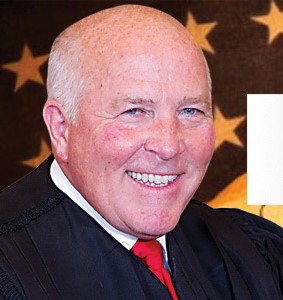
Judge Wheless's court handles civil and criminal cases. He is married to Cynthia McCrann Wheless, presiding judge of Collin County's 417th District Court, which has a juvenile docket.
Born in Abilene, Wheless dropped out of school and joined the Air Force during the Vietnam era. He fixed fighter aircraft in California and came out four years later with a G.E.D. and four years of college under his belt. He got a Bachelor's in Business Administration in California and went to UT Law in Austin. He became an AV-rated specialist in civil trial law and personal injury trial law, served as president of the Plano Bar Association, the Collin County Bar Association, and the Plano Metro Rotary Club. A 35-year Republican Party activist, he was appointed a public member of the State Board of Chiropractic Examiners, a county-court-at-law judge in 2000, a district court judge in 2009. He's been a member of the Texas Parental Rights Advisory Panel. His main claim for preferment is that he established Collin County's first misdemeanor and felony drug courts, is Chair of the Specialized Courts Advisory Council, and is President-elect of the Texas Association of Drug Court Professionals.
This guy is very charming and energetic. I've had two phone conversations with him and enjoyed both of them immensely, Since I interviewed him in July, he has been to more political functions in my home county, Montgomery, than I have. What kind of Court of Criminal Appeals judge would he make? Only God knows. He doesn't have a background as an appellate lawyer nor as a prosecutor nor as a criminal defense attorney.
Houston criminal district judge Mary Lou Keel is the other person in this race with a campaign committee. I intend to have a piece about her at the end of the week
Saturday, February 28, 2015
Federal Court of Appeals Decisions without a Trial Court Judgment
There are very few exceptions to the general rule that you cannot have an appeal without a prior trial court dispute.
One apparent exception is that the Supreme Court of the United States is not merely an appellate court. The United States Constitution says in Article III, Section 2 in the second paragraph says that "[i]n all Cases affecting Ambassadors, other public Ministers and Consuls, and those in which a State shall be Party, the supreme Court shall have original Jurisdiction." In these cases, the Supreme Court commonly appoints a master to take the facts in a case and then renders a legal decision on those facts. thought it need not according to Supreme Court Rule 17 and other law.
In order to understand the one ordinary exception to this rule, you have to understand the difference between courts that are created under Article III of the United States Constitution, the main ones being the Supreme Court of the United States, the United States Courts of Appeals and the United States District Courts and non-Article III tribunals. Article III courts are the courts which are the models for America's judicial independence. The judges' pay cannot be reduced during their time in office and Article III judges cannot be removed except by impeachment of the House of Representatives and conviction by two-thirds of the Senate. Non-Article III judges lack these protections- they are chosen for fixed terms and are easier to remove. Non-Article III courts are generally decision-making bodies for specialized agencies, for example, United States Citizenship and Immigration Services, or the Environment Protection Agency. Federal statutes often provide that the final administrative decisions of such bodies may receive their first Article III proceeding in a court of appeals instead of a district court. E.g. Commodity Futures Trading Commission v. Schor, 478 U.S. 833 (1986)
Subscribe to:
Posts (Atom)