Rules governing electronic filing in Texas criminal cases have been finally approved. A clerk may implement criminal case electronic filing in that clerk’s office when that clerk has
the written consent of a majority of the judges in the county who have jurisdiction in criminal
cases and who are served by that clerk. Appellate courts generally require e-filing for documents filed by attorneys in criminal matters, so these new rules apply to trial courts. Under these rules, e-filing may not be the exclusive manner of filing documents; paper filing must still be allowed (i.e. the kind of filing done presently). Charging instruments cannot be e-filed; they must be paper-filed. Otherwise, the e-filing is similar to that in civil cases, viz. no in camera material, no material under seal or proposed to be under seal, no sensitive information.
New rule 1.04(b) does not appear to be harmonized with Texas Civil Practice and Remedies Code Annotated section 132.001 (West Supp. 2015). It appears to me that a statute trumps a supreme court administrative rule.
About Me

- Bob Mabry
- Civil appellate, criminal appellate, and criminal trial lawyer at 704 North Thompson Street, #157, Conroe, Texas 77301-2578, (936) 494-1393.
Wednesday, October 14, 2015


Sunday, October 11, 2015
Personable, Hard-Charging, Drug-Court Leader Wants to Replace Larry Meyers on the Texas Court of Criminal Appeals
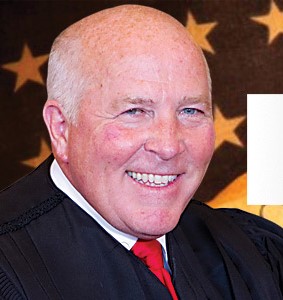
Spanning the state to bring you the constant variety of Texas Court of Criminal Appeals politics, I am finding candidates for next year's election. First up--366th District Court Judge Ray Wheless of Collin County (the county north of Dallas County, and red as a beet), seeking position two. It is currently occupied by Lawrence Meyers, who switched from the Republican Party to the Democratic.
Judge Wheless's court handles civil and criminal cases. He is married to Cynthia McCrann Wheless, presiding judge of Collin County's 417th District Court, which has a juvenile docket.
Born in Abilene, Wheless dropped out of school and joined the Air Force during the Vietnam era. He fixed fighter aircraft in California and came out four years later with a G.E.D. and four years of college under his belt. He got a Bachelor's in Business Administration in California and went to UT Law in Austin. He became an AV-rated specialist in civil trial law and personal injury trial law, served as president of the Plano Bar Association, the Collin County Bar Association, and the Plano Metro Rotary Club. A 35-year Republican Party activist, he was appointed a public member of the State Board of Chiropractic Examiners, a county-court-at-law judge in 2000, a district court judge in 2009. He's been a member of the Texas Parental Rights Advisory Panel. His main claim for preferment is that he established Collin County's first misdemeanor and felony drug courts, is Chair of the Specialized Courts Advisory Council, and is President-elect of the Texas Association of Drug Court Professionals.
Judge Wheless's court handles civil and criminal cases. He is married to Cynthia McCrann Wheless, presiding judge of Collin County's 417th District Court, which has a juvenile docket.
Born in Abilene, Wheless dropped out of school and joined the Air Force during the Vietnam era. He fixed fighter aircraft in California and came out four years later with a G.E.D. and four years of college under his belt. He got a Bachelor's in Business Administration in California and went to UT Law in Austin. He became an AV-rated specialist in civil trial law and personal injury trial law, served as president of the Plano Bar Association, the Collin County Bar Association, and the Plano Metro Rotary Club. A 35-year Republican Party activist, he was appointed a public member of the State Board of Chiropractic Examiners, a county-court-at-law judge in 2000, a district court judge in 2009. He's been a member of the Texas Parental Rights Advisory Panel. His main claim for preferment is that he established Collin County's first misdemeanor and felony drug courts, is Chair of the Specialized Courts Advisory Council, and is President-elect of the Texas Association of Drug Court Professionals.
This guy is very charming and energetic. I've had two phone conversations with him and enjoyed both of them immensely, Since I interviewed him in July, he has been to more political functions in my home county, Montgomery, than I have. What kind of Court of Criminal Appeals judge would he make? Only God knows. He doesn't have a background as an appellate lawyer nor as a prosecutor nor as a criminal defense attorney.
Houston criminal district judge Mary Lou Keel is the other person in this race with a campaign committee. I intend to have a piece about her at the end of the week
Wednesday, September 2, 2015
Effective September 1 The Texas Supreme Court Changes Juvenile Certification Appellate Practice
The Texas Supreme Court ordered that juvenile certification appeals be accellerated and that juvenile courts tell a respondent of that person's right to an immediate appeal, effective September 1. A juvenile court certifying a juvenile to stand trial as an adult must must tell the juvenile and the juvenile's attorney orally on the record in open court and in writing of the right to immediately appeal the certification decision and the accelerated nature of the appeal. As far as reasonably possible, those appeals are to get to final disposition within 180 days.
Friday, August 28, 2015
Texas Bar Litigation Section's Fall 2015 Issue of The Advocate Has Useful, Helpful Articles for Civil Appellate Practitioners.
The Advocate, the publication of the State Bar of Texas Litigation Section, has two outstanding article which should be of interest to followers of this blog: "Permissive Interlocutory Appeals in Texas" by Connie Pfeiffer on page 48 of the Fall 2015 issue and "Which of These Motions Are Appealable" by Jane Webre on page 52.
Sunday, July 19, 2015
The Federal Fifth Joins the Ninth and Second Circuits as Against the Sixth Circuit Deciding that Spilling the Beans in the Beginning of a False Claims Suit Doesn't Necessarily Kill the Suit.
In April 2006, claim-adjuster sister plaintiffs Cori and Kerri Rigsby bring a qui tam action under the False Claims Act, 31 U.S.C.
§ 3729 et seq., claiming
that State Farm Fire and Casualty Company submitted false claims
to the United States government for payment
on flood policies arising out of damage caused
by Hurricane Katrina. The FCA allows private parties to bring a suit for the
United States against anyone submits false or fraudulent claims to the government.
A winning private party gets part of the recovery. At trial, the Rigsbys prevail on a single bellwether false claim under the FCA. Black’s
Law Dictionary calls a “bellwether trial” as a nonbinding trial of a case
or set of cases, on issues representative of the common claims of a mass tort
proceeding, held to determine the merits of the claims and the strength of the
parties’ positions on the issues. It adds that such a trial is often used as a
procedural device to encourage settlements. The
district court later
keeps the Rigbys from conducting further
discovery, and denies
State Farm’s motions for a new trial and judgment notwithstanding the verdict.
Both sides appeal.
The issue of importance to federal law as a whole is whether the Rigsbys’ alleged
violations of the FCA’s seal requirement independently warrant dismissal. This
is an issue of first impression in the fifth circuit. The three other circuits disagree
about the effect of a seal violation.
State Farm says that the Rigsbys’ violations of the FCA’s
seal requirement independently warrant dismissal. The FCA requires that a “copy of the complaint and written disclosure of substantially all material evidence and information the person possesses
shall be served on the government.” The complaint must be filed in camera and remain under seal until the court orders it served on the defendant. Whether a violation of this requirement compels
dismissal presents
a statutory interpretation question reviewed de novo. The seal requirements are procedural, not jurisdictional.
In U.S. ex rel. Lujan
v. Hughes Aircraft Co., the plaintiff filed her FCA suit under seal but subsequently disclosed, to a national newspaper, the existence of the suit
and the nature of her allegations about a government contractor mischarging for its
work on a plane’s
radar system. 67 F.3d 242, 243–44 (9th Cir. 1995). Two articles
were subsequently published revealing that the suit had been filed
and relaying the substance of the claims. Id. at 244. The district court dismissed the suit because of the seal violations. Id. at 243.
The Ninth Circuit reversed. Id. at 243, 247. The court determined
that no provision
in the FCA explicitly authorizes dismissal as a sanction for a seal violation. Id. at
245. The court then looked to the
legislative history surrounding the passage of the 1986 amendments to the FCA that added the seal provision, and determined that Congress sought
to strike a balance between encouraging private FCA actions
and allowing the government an adequate opportunity to evaluate
whether to join the suit. Id. (citing S. Rep. No. 99-345,
at 23–25 (1986)).
The Lujan court concluded that the plaintiff
had violated the seal requirement, but remanded
with instructions for the district court to
evaluate three factors in determining
whether dismissal was warranted:
1)
the harm to the government from the violations;
2)
the nature of the violations; and
3)
whether the violations were made willfully or in bad faith. Id. at 245–47.
B. The Second Circuit
The Second Circuit adopted a similar
analysis in U.S. ex rel. Pilon v. Martin
Marietta Corp., 60 F.3d 995, 997,
999–1000 (2d Cir. 1995).
C.
The Sixth
Circuit
By
contrast, the Sixth Circuit held that
any violation of the seal requirement, no matter
how trivial, requires dismissal. See Summers, 623 F.3d at 299. The Summers court
determined that Congress’s choice
of a 60-day seal period already
reflected legislative balancing of the interests identified by the Lujan court. See id. at 296. The Summers court also feared that a balancing test would
encourage “plaintiffs to comply
with the FCA’s under-seal requirement
only to the point the costs of compliance are outweighed
by the risk” of dismissal. Id. at 298.
D. Conclusion
While cognizant of the justification for and the merits of a per se rule,
we conclude that a seal violation does not automatically mandate dismissal. As the Lujan court recognized
and the government
stated as amicus in this case, nothing in the text of § 3730(b)(2) “explicitly authorizes dismissal as a sanction for disclosures in violation
of the seal requirement.” 67 F.3d at 245. Perhaps more essentially, though, the 1986 amendments to the FCA were intended to encourage more, not fewer, private FCA actions.
See S. Rep. No. 99-345, at 1– 8, 23–25. Holding that any violation of the seal requirement mandates dismissal would frustrate that purpose, particularly when the government suffers minimal
or no harm from
the violation. We therefore embrace
the Lujan test for addressing violations of § 3730(b)(2) and turn
to the relevant facts
here. We review the district court’s
application of the Lujan factors, and its election of a remedy for a seal violation, for abuse of discretion. See Lujan, 67 F.3d at
247 (“Imposition of dismissal as a sanction
is reviewed for abuse of discretion.”); Pilon, 60 F.3d at 1000.
The Rigsbys filed their initial complaint
under seal on April 26, 2006, and served
a copy to the government. State
Farm alleges that the Rigsbys’ prior counsel then disclosed
the existence of the lawsuit
to several news outlets by emailing copies
of the evidentiary disclosures and engineering reports,
sometimes including the case caption. State Farm also alleges
that the Rigsbys themselves sat for interviews that culminated in the publication of multiple news stories—including one interview that was the subject
of a national broadcast on ABC’s 20/20 program—and notified a Mississippi congressman of their FCA action. Most of these events occurred before the seal was partially lifted on January
10, 2007, to allow the Rigsbys
to address related
litigation in Alabama.
The seal was fully lifted on August 1, 2007.
First, we limit
the scope of our inquiry
to the period
between the filing of the
complaint and the partial seal lift. Indeed, while
neither party appears to have scrutinized the docket in the related litigation, the existence of this qui tam litigation was revealed
there in another party’s public
filings within days of the partial
seal lift. This effectively mooted the original seal. We also confine our analysis to disclosures of the existence
of the suit itself,
and do not consider disclosures of the underlying allegations. The seal provisions limit the relator only from publicly
discussing the filing of the qui tam complaint. Nothing
in the FCA prevents
the qui tam relator from disclosing the existence of the fraud.
Having closely reviewed each of the disclosures offered by State Farm that fall into the aforementioned time period and relate to the existence of the FCA suit, the court first
concludes that the Rigsbys
violated the seal provision, but
the opinion agrees with the district
court’s determination that none of the disclosures appear to have resulted in the publication of the existence
of this suit before the seal was partially
lifted. First that the
government was not likely harmed.
If State
Farm was not tipped off about the existence
of the suit from the Rigsbys’ disclosures, a fundamental purpose of the
seal requirement—allowing the government to determine whether to join the suit without tipping
off a defendant—was not imperiled
Second, the violations here—unlike those in many other cases that resulted in dismissal,—did not involve
a complete failure to file under seal or serve the government, and were therefore considerably less severe. The fifth circuit acknowledges that some of the above-mentioned publications revealed that the Rigsbys turned over material
to federal and state prosecutors. But each reference to those disclosures is in the context of allegations about State Farm misleading policyholders, not the federal government. The distinction is significant because
the revelation of possible private or public enforcement to protect policyholders would not alert State Farm to a pending FCA suit.
With respect to bad faith, the district court
determined that “there is nothing in the record to suggest
that the disclosures in question . . . were authorized by or made at the suggestion of the Relators,” and held that a finding of bad
faith or willfulness was
unwarranted. There is no indication that the Rigsbys
themselves communicated the existence of the suit in the relevant interviews. Was the appeals court to impute
their former attorneys’ disclosures to them, however, we would conclude that they acted in bad faith. Even presuming bad faith, the Lujan factors favor the Rigsbys.
Although they violated the seal requirement, the Rigsbys’ breaches
do not merit dismissal.
Subscribe to:
Posts (Atom)