- Hardin
- Jasper
- Jefferson- county seat Beaumont, where the Ninth Court of Appeals has its offices, courtrooms, and chambers- Jefferson is the second largest county in the Supreme Judicial District and is the primary home of Orgain Bell and Tucker LLP.
- Liberty
- Montgomery- county seat Conroe, the largest county in the Supreme Judicial District where I live and practice
- Newton
- Orange
- Polk
- San Jacinto
- Tyler
About Me

- Bob Mabry
- Civil appellate, criminal appellate, and criminal trial lawyer at 704 North Thompson Street, #157, Conroe, Texas 77301-2578, (936) 494-1393.
Showing posts with label appeals. Show all posts
Showing posts with label appeals. Show all posts
Saturday, November 10, 2018
Come On in, the Water's Fine
I welcome my friends at Orgain Bell and Tucker LLP to the Texas Ninth Court of Appeals part of the blogosphere with their new blog, Navigating the Ninth, which I have put on our Link List, and wish them luck in helping to keep people informed about an important and neglected part of the Texas court system. The Ninth Court of Appeals covers ten counties:


Monday, March 5, 2018
It's a Real Choice for the GOP Nomination for Presiding Judge of the Court of Criminal Appeals

Saturday, February 3, 2018
Sharon Keller's Done a Lot of Stuff and She's Doing a Lot of Stuff
Three seats on Texas's Court of Criminal Appeals will be contested in the fall. With the shriveling up of newspapers and fair-minded, even-handed news coverage on the internet, we're going to post information about all of the candidates.

Presiding Judge Sharon Keller runs for re-election. She grew up in Dallas, went to undergraduate school in Houston at Rice University taking a degree in philosophy. After that, she went to Southern Methodist University in Dallas and took a Juris Doctorate at Southern Methodist University. She worked for another attorney at first. Later she was a solo and spent some time working in her parents' family business. She got appointed for many criminal appeals and ended up an appellate prosecutor in the Dallas County District Attorney's office. She ran as a Republican before being a Republican was cool and won a seat on the bench in 1994. In 2000, she was elected Presiding Judge, and was reelected in 2006 and 2012. She has gotten through this most recent term without the challenges of her past troubles.
She is the candidate of experience in this race. The Presiding Judge is not only the senior jurist of the nine jurists, but she is the administrator of the court with its sizable budget and dozens of staffers. By virtue of her office she is the vice-chair of the Texas Judicial Council, the policymaking body for the Texas judiciary. She is the chair of the Texas Indigent Defense Commission. They grant money and develop systems to help with indigent criminal defense. They count the appointment hours private defenders of indigents serve, finance continuing legal education for indigent defenders, developed a way for indigent west Texas capital defendants to have a measure of choice in who their lawyers were, among other good works. She's also on the board of the Council of State Governments Justice Center which develop and popularize innovative law enforcement, judicial, and corrections policies. Although she chooses half of the members of Texas Department of Criminal Justice Judicial Advisory Council, and the Chief Justice of the Supreme Court of Texas chooses the other half. Chief Justice Hecht chose Presiding Judge Keller as a member.
Presiding Judge Keller said that she enjoyed the "extra-curricular" (ceremonial) parts of her job very much and didn't think, when she started the job, that she would enjoy that part so much.
She has only one opponent for the Republican nomination, David Bridges of the Texas Fifth Court of Appeals in Dallas. There is only one Democrat seeking the nomination of that party, Maria T. ("Terri") Jackson, judge of Houston's 339th Judicial District Court; her husband recently had cancer surgery. About Ms. Jackson, more in March.
She is the candidate of experience in this race. The Presiding Judge is not only the senior jurist of the nine jurists, but she is the administrator of the court with its sizable budget and dozens of staffers. By virtue of her office she is the vice-chair of the Texas Judicial Council, the policymaking body for the Texas judiciary. She is the chair of the Texas Indigent Defense Commission. They grant money and develop systems to help with indigent criminal defense. They count the appointment hours private defenders of indigents serve, finance continuing legal education for indigent defenders, developed a way for indigent west Texas capital defendants to have a measure of choice in who their lawyers were, among other good works. She's also on the board of the Council of State Governments Justice Center which develop and popularize innovative law enforcement, judicial, and corrections policies. Although she chooses half of the members of Texas Department of Criminal Justice Judicial Advisory Council, and the Chief Justice of the Supreme Court of Texas chooses the other half. Chief Justice Hecht chose Presiding Judge Keller as a member.
Presiding Judge Keller said that she enjoyed the "extra-curricular" (ceremonial) parts of her job very much and didn't think, when she started the job, that she would enjoy that part so much.
She has only one opponent for the Republican nomination, David Bridges of the Texas Fifth Court of Appeals in Dallas. There is only one Democrat seeking the nomination of that party, Maria T. ("Terri") Jackson, judge of Houston's 339th Judicial District Court; her husband recently had cancer surgery. About Ms. Jackson, more in March.
Saturday, December 23, 2017
Can the Texas Legislature Give Someone a Break? Or Must It Follow Court Judgments?
This post starts with a Beaumont case we discussed in February, Roger Dale Vandyke v. State, 485 S.W.3d 507, (Tex. App.--Beaumont Feb. 10, 2016) pet. granted July 4, 2016. Now the Court of Criminal Appeals has reversed it. Roger Dale Vandyke v. State, __ S.W.3d ___, No. PD-0283-16, (Tex. Crim, App., Dec. 20, 2017) (Judge Newell wrote the opinion joined by Presiding Judge Keller, and Judges Hervey, Alcala, Richardson, Keel, and Walker.).
Vandyke had been civilly committed as a sexually violent predator, and was convicted of failing to progress in sexually violent predator treatment and received a sentence of 25 years for that. But, afterwards, a new law was enacted in Act of May 21, 2015, 84th Leg., R.S., ch. 845, § 13, 2015 Tex. Gen. Laws 2700, 2704. The Legislature amended section 841.085 to limit prosecution to violations of civil commitment requirements under subsections (1), (2), (4), and (5). Id. Thus, under the amended statute's plain language, failure to complete sex offender treatment is no longer a basis for prosecution.
Section 841.085's limitation on prosecution applies to an offense committed before, on, or after the amendment's effective date, “except that a final conviction for an offense under that section that exists on the effective date of this Act remains unaffected[.]” Act of May 21, 2015, 84th Leg., R.S., ch. 845, § 41, 2015 Tex. Gen. Laws 2700, 2711.
Isn't Vandyke's conviction not final?
if Vandyke's conviction is on appeal, then the State (and the Beaumont Texas Ninth Court of Appeals) is going to say that his conviction is not final.
Can the Legislature "undo" a conviction by changing the law?
The Court of Appeals says "No."
There are two oddments of Texas legal history that explain why the Court of Appeals's opinion is twelve pages long and the Criminal Court of Appeals's opinions (Judge Yeary wrote a dissent that Judge Keasler joined.) total 41 pages.
- Governor James E. "Pa" Ferguson granted 1,774 pardons and 479 conditional pardons between 1915 and 1917. Pa was forced to resign in 1917. When his lieutenant governor Mr. W.P. Hobby, succeeded him, Hobby granted 1,319 pardons and 199 conditional pardons between 1917 and 1921, , Governor Miriam A. "Ma" Ferguson granted 384 pardons and 777 conditional pardons between 1925 and 1926. This led to a demand to curb the governor's pardoning power, and in 1936 the constitution was amended so as to create a constitutional Board of Pardons and Paroles, and to limit the clemency powers of the Governor by providing that in all criminal cases except treason and impeachment, the Governor should have power, after conviction, “on the written signed recommendation and advice of the Board of Pardons and Paroles, or a majority thereof, to grant reprieves and commutations of punishment and pardons.” The Governor may grant one reprieve, not to exceed 30 days, in a capital case without action of the board.
Tex. Const. art. IV, § 11, Interpretive Commentary
2. The branches of the government of the State of Texas have a history of struggling with one another." " . . . [N]one of the three governmental branches 'shall exercise any power properly attached to either of the others, except in the instances herein expressly permitted.' Tex. Const. art. II, § 1" (Beaumont Vandyke at 5).This separation of powers clause is violated in one of two ways: (1) “when one branch of government
assumes, or is delegated, to whatever degree, a power that is more ‘properly attached’ to another branch[;]” and (2) “when one branch unduly interferes with another branch so that the other branch cannot effectively exercise its constitutionally assigned powers.” Armadillo Bail Bonds v. State, Armadillo Bail Bonds v. State, 239 (Tex. Crim. App. 1990). (Beaumont Vandyke at 5, again). Citing Ex parte Giles favorably , 502 S.W.2d 774 (Tex. Crim. App. 1973), Beaumont accepts the State's contention that by amending the statute to decriminalize certain conduct, the Legislature “improperly assumed the executive branch’s clemency power.”
In the Court of Criminal Appeals, Judge Newell cited cases in which the Legislature changed statutes and thereby decriminalized actions: Williams v. State, 476 S.W.2d 307, 309 (Tex Crim. App. 1972); Mendoza v. State, 460 S.W.2d 145, 147 (Tex. Crim. App. 1970) Cox v. State, 234 S.W. 531 (Tex. Crim. App. 1921) (noting that a statutory amendment removing the act of possessing equipment for making intoxicating liquor from the forbidden conduct in a penal offense constitutes a repeal of the law under which the defendant was convicted).
Austin's dissenters accepted Beaumont's argument that not following through on punishing Vandyke would be to pardon him-- a thing that no Texas court can do.
2. The branches of the government of the State of Texas have a history of struggling with one another." " . . . [N]one of the three governmental branches 'shall exercise any power properly attached to either of the others, except in the instances herein expressly permitted.' Tex. Const. art. II, § 1" (Beaumont Vandyke at 5).This separation of powers clause is violated in one of two ways: (1) “when one branch of government
assumes, or is delegated, to whatever degree, a power that is more ‘properly attached’ to another branch[;]” and (2) “when one branch unduly interferes with another branch so that the other branch cannot effectively exercise its constitutionally assigned powers.” Armadillo Bail Bonds v. State, Armadillo Bail Bonds v. State, 239 (Tex. Crim. App. 1990). (Beaumont Vandyke at 5, again). Citing Ex parte Giles favorably , 502 S.W.2d 774 (Tex. Crim. App. 1973), Beaumont accepts the State's contention that by amending the statute to decriminalize certain conduct, the Legislature “improperly assumed the executive branch’s clemency power.”
In the Court of Criminal Appeals, Judge Newell cited cases in which the Legislature changed statutes and thereby decriminalized actions: Williams v. State, 476 S.W.2d 307, 309 (Tex Crim. App. 1972); Mendoza v. State, 460 S.W.2d 145, 147 (Tex. Crim. App. 1970) Cox v. State, 234 S.W. 531 (Tex. Crim. App. 1921) (noting that a statutory amendment removing the act of possessing equipment for making intoxicating liquor from the forbidden conduct in a penal offense constitutes a repeal of the law under which the defendant was convicted).
Austin's dissenters accepted Beaumont's argument that not following through on punishing Vandyke would be to pardon him-- a thing that no Texas court can do.
Note One- When Presiding Judge Sharon Keller-- my fellow philosophy major-- gives her vote to a defendant-appellant-petitioner: that is noteworthy, and seems to me to be a sign on first face that that petitioner's case is strong on the merits. She has a history of liking the State's side very much.
Note Two- There is an unsung hero here, my fellow Conroe criminal trial and appellate lawyer Scott Pawgan, truly an absolutely first-rate attorney. He boldly and cleverly argued the merits of the 2015 amendment to a hostile Beaumont Court of Appeals which rejected his arguments, but which Pawgan used to persuaded seven out of nine CCA judges, even the super-hard-to-sell Presiding Judge. A lesser advocate might well have failed.
Tuesday, August 29, 2017
Texas Court System's Adaptation to and Beaumont's Ninth Court of Appeals's Closing for Tropical Storm Harvey
Texas's Supreme Court and Court of Criminal Appeals have encouraged state courts to be lenient with people suffering delays because of Harvey-- more than a few people are trapped in their homes and won't be able to get out for days. Beaumont's Ninth Court of Appeals's appears to have closed Friday, August 25, 2017 at five PM and will not open until further notice.
Tuesday, November 8, 2016
Things Could Be Different

Mark W. Bennett caused part of the statute against improper relationship between educator and student to be held to be unconstitutional on the ground that non-obscene materials that concern sexuality may well be appropriate objects of study, and disallowing communication about them is a content-based restriction on protected speech. Examples would be "The Rape of the Sabine Women,“ the "Venus de Milo," ancient Greek myths concerning the sexual prowess of Zeus and Renaissance ribald plays (I noticed that there was no mention of the Bible-- the end of the story of Noah, Lot's daughters, the Song of Solomon, etc.).
Bennett proposes to make lawyers work harder-- he believes CCA judges are afraid to find ineffective assistance of counsel when defense lawyers give it and are afraid to recognize pleadings that do not state a cause of action, when prosecutors write them.
Many law students and young lawyers, when they first encounter criminal practice are struck how much the State seems to always be fighting from the high ground. The criminal laws that are important on a day-to-day basis favor the State, either directly or by effect. And on top of that, judges who use their considerable discretion to practically always favor the State tend to be rewarded by the electorate rather than punished. Bennett appears to find this scandalous, and wishes to show that the status quo is not inevitable, it is what the electorate votes for. People could vote for something different.
Saturday, October 15, 2016
Retired Ninth Supreme Judicial District Appeals Justice Dies

McNicholas was born in Marinisco, a tiny logging village on the Upper Peninsula of Michigan, a tiny village near the Wisconsin border on April 23, 1918. He got his undergraduate degree and law degree from the University of Michigan. Before his last year of law school, he served as a Captain in the Third Army during World War Two and served under George Patton. He received his law degree in 1948. He was admitted to the Michigan bar in 1948 and the Texas bar in 1949. McNicholas was admitted to practice in all Texas state courts and the United States District Court for the Eastern District of Texas as well as the United States Court of Appeals for the Fifth Circuit. He is a member and past president of the Jefferson County Bar Association, as well as a member of the Texas Association of Defense Counsel.
Judge McNicholas practiced law in Beaumont for sixty years. Most recently he was of counsel at Germer, PLLC. He was Mayor of the City of Beaumont from 1968-1970 and was a Board Member of Jefferson County Drainage District Six at his death.
Funeral services will be held at 11:00 a.m. on Monday, October 17, 2016, at St. Andrew’s Presbyterian Church, 23rd and Gladys, Beaumont, Texas. Our condolences go to his family.

Friday, October 14, 2016
Dallas Court of Appeals Justice Resigns in Lieu of Facing Removal Proceedings
David Lewis, a justice on Texas's Fifth Court of Appeals in Dallas, resigned just as removal papers were filed against him with the Texas Supreme Court on Tuesday. Lewis suffered from alcoholism and depression and had been suspended without pay since September 2014. According to the records of the Texas Commission for Judicial Conduct quoted in the Dallas News blog of the Dallas Morning News, Lewis was "erratic, hostile and threatening." A doctor chosen by the Judicial Conduct Commission reported that Lewis's problems began as early as 2013 and that a scan of his brain in 2015 is of a person who is experiencing decreased cognitive function and is trying to cover that up.
Governor Abbott will appoint a person to fill Lewis's seat on the bench until his term ends in 2018. Lewis is a Republican. Texas's Fifth Court of Appeals is the state appeals court for Collin, Dallas, Grayson, Hunt, Kaufman, and Rockwall counties.
Hat tip to the Texas Lawyer newspaper's online bulletin.

Governor Abbott will appoint a person to fill Lewis's seat on the bench until his term ends in 2018. Lewis is a Republican. Texas's Fifth Court of Appeals is the state appeals court for Collin, Dallas, Grayson, Hunt, Kaufman, and Rockwall counties.
Hat tip to the Texas Lawyer newspaper's online bulletin.

Monday, July 11, 2016
Getting an Appellant's Reporter's Record-- Poor or Rich
Within
the time for perfecting the appeal, an appellant who is unable to pay for the
appellate record may, by motion and affidavit, ask the trial court to have the
appellate record furnished without charge.[1]
If after hearing the motion the court finds that the appellant cannot pay or
give security for the appellate record, the court must order the reporter to transcribe
the proceedings.[2]
When the court certifies that the appellate record has been furnished to the
appellant, the reporter must be paid from the general funds of the county in
which the offense was committed, in the amount set by the trial court.[3]
Wednesday, April 27, 2016
Cross Appeals
As to Texas civil cases, if any party timely files a notice of appeal, another party may file a notice of appeal within the applicable period stated above or 14 days after the first filed notice of appeal, whichever is later.
The leading Texas criminal case on cross-appeals is Pfeiffer v. State, 363 S.W.3d 594, 599 (Tex. Crim. App. 2012). It taught an appellate court's jurisdiction is invoked by the timely filing of a notice of appeal. And that the proper notice of appeal vests Texas appellate courts with a broad scope of review and revision over a criminal case. Once jurisdiction of an appellate court is invoked, exercise of its reviewing functions is limited only by its own discretion or a valid restrictive statute. For example, appellate courts may review unassigned error—a claim that was preserved in the trial court but was not raised by either party on appeal. Pfeiffer quoted Carter v. State, 656 S.W.2d 468 (Tex. Crim. App. 1983) that quoted an even older case from the Texas republic that there is a fundamental proposition pertaining to appellate functions of the Judicial Department: A constitutional grant of appellate jurisdiction treats a right of appeal in criminal cases ‘as a remedy to revise the whole case upon the law and facts, as exhibited in the record. Thus, when a defendant appeals a conviction, the courts of appeals have the jurisdiction to address any error in that case, including the State. When a defendant appealed his conviction, the entire case was subject to review, and the State could raise its claim of an illegal sentence without filing any notice of appeal.
Wednesday, February 10, 2016
A Hard-Working Second-Career Appellate Lawyer and Courtroom Litigator Seeks Place Five

So far we've spoken about three of the Republicans seeking to replace the retiring Cheryl Johnson: Sid Harle, Steve Smith, and Brent Webster, which only leaves Scott Walker.
An honors graduate of Dallas Baptist University and a Baylor law grad., he was admitted to the bar in 1998. A born Texan, he claims that he comes from generations of conservatives, and has been a Republican all of his adult life.
He has had a first career that he doesn't mention in his campaign materials-- he was a swimming pool builder.
Walker describes his practice as one of civil defense, veterans’ disability, criminal litigation, and appellate advocacy. Walker claims over seventy appellate briefs and more than 40 first-chair trials in district courts across north Texas. He does not appear to have ever been a prosecutor.
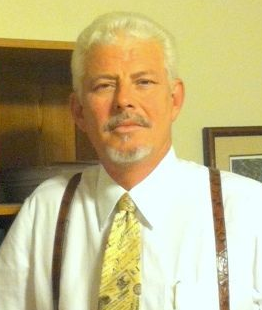
Walker's a member of the Texas Bar College, has been married to the same woman for 41 years, and claims to be an evangelical Christian active in a Dallas-area church. He appears to be keeping up a busy practice during his candidacy, snatching spare minutes out of his day for politics. There may be better looking candidates in the race, but I give him the prize for best campaign photograph.
Friday, February 5, 2016
A Man of Many Parts, a Man for All Seasons, Heads to the CCA Hustings.
Richard Davis is the Republican challenging Judge Mike Keasler for Place Six on the Texas Court of Criminal Appeals is Richard Davis who ran for Place Four to succeed Paul Womack two years ago, only to get nosed out by Kevin Yeary. He tells me that he intends to run a more vigorous campaign than he did two years ago and so far has been endorsed by the Houston Police Officers Union. He says that he is a fan of this blog. An easygoing talker, with a sonorous, beautiful speaking voice, he practices general trial and appellate law in Burnet, Texas, near Austin. He has 32 years of experience. Graduating from Baylor law school started practicing law in Brownsville, then Waco, and then in Odessa before moving to the Austin area where he eventually ended up with the Burnet practice he has today. He was a special prosecutor, then acting Sherman County Attorney in Stratford in the panhandle and worked in Odessa in the Ector County District Attorney's office and then later in the County Attorney's office, and had an appointment as a special prosecutor when he was at the County Attorney's office. He has been a contract public defender in Burnet. Along with a Travis County Assistant District Attorney, Davis did a jury selection training for Baylor. He won a "Best Lawyer in Burnet" award in the local paper. He loves to hunt, but doesn't get as much chance to do it as he would like, and is married to a shy woman. He has recent practical experience on both sides of the docket, and, compared to the other Republican candidates is very much in touch with the challenges of small firm lawyers who make up the great bulk of the defense bar.
Saturday, December 19, 2015
The Queen of Qualifications, Mary Lou Keel, Is Ready to Rise

Mary Lou Keel, presiding judge of Houston's 232nd Judicial District Court, believes that this is her moment.
The Texas Court of Criminal Appeals is an appellate court. Unhappy litigants in criminal court and people claiming that they are illegally imprisoned send papers to the court, and it orders relief or doesn't. Some of the most important work that it does is to write opinions that not only decide cases, but also guide Texas's criminal courts how to do all their cases. These opinions interpret the United States Constitution, the Texas Constitution, opinions of the Supreme Court of the United States, former opinions of the Texas Court of Criminal Appeals, and Texas statutes among many other authorities. And yet, in this most scholarly and intellectual of Texas criminal courts, prospective judges are sometimes not the strongest scholars.
But this doesn't apply to Judge Keel. She started her career as a briefing attorney for the First Court of Appeals in Houston, an intermediate appellate court. Then she spent eight years as a Harris County prosecutor, first as a trial lawyer, than an appellate lawyer. While she was there, she became board certified in criminal law, which puts her in the specialization elite. After that, she's spent the last two decades-- more actually-- on her bench. And she's no ordinary judge, she's the wiretap judge for the Second Administrative Judicial District. For pro bono work, she does Spanish translations to support Cuban dissident journalists and bloggers.
Poor woman, she grew up in Austin and went to undergraduate school and has lived the rest of her life in the Houston area-- backwards from what I would think is luck.
What bad things do her adversaries say about her? That her husband is a Democrat.
She is a clever, tough campaigner, showing on her candidate website that she's done hundreds of appeals while her adversaries' appeal counts are in the single digits, that she's been a felony judge longer than her adversaries, that she's been a specialist longer than the one of her adversaries who's also a specialist. The one thing that seems conspicuously absent is experience as a defense counsel.
She's an introvert, a little awkward with strange reporters, but of everybody I know who's worked with her closely-- they all love her: former Harris County prosecutors Colleen Barnett (now a realtor), Celeste Blackburn (now a Board Certified Criminal Law specialist in Conroe, Texas), and Brett Ligon (elected Montgomery County District Attorney).
Her Republican adversaries are Ray Wheless and Mr. Chris Oldner.
,
Thursday, December 17, 2015
The Candidates for Texas's Court of Criminal Appeals

Texas and Oklahoma are the only U.S. states that have separate highest courts for civil and criminal matters. Texas's Supreme Court only takes civil matters. In Texas, juvenile cases, cases the State brings against young people who are delinquent or in need of supervision go to the Supreme Court, not the Court of Criminal Appeals.
Place Two is presently held by Larry Meyers, who pioneered Republicans' being on the court switched parties last cycle to become the only Democrat holding statewide office in Texas. He runs for reelection as a Democrat. The Republicans vying to challenge him are Houston state District Court judge Mary Lou Keel, Collin County District Judge Mr. Chris Oldner, and Collin County District Judge Ray Wheless. Collin County, county seat McKinney, is a suburban county just north of Dallas, except for the tiny part of Dallas which is in the county.
Cheryl Johnson is retiring out of Place Five on the Court. Republicans seeking to replace her are: San Antonio District Judge Sid Harle, Williamson County prosecutor Brent Webster, Steve Smith, a successful advocate in Hopwood v. Texas in which the Fifth Circuit struck down reverse racial discrimination at UT-Austin until the United States Supremes reversed it- he also won a partial term as a Texas Supreme Court justice, also a Tarrant County lawyer named Scott Walker is running. Somebody named Betsy Johnson, apparently from San Antonio, has signed up to run as a Democrat.
Judge Michael E. Keasler runs for reelection in Place Six. Richard Davis, the Richard Dean Davis from last cycle is running against him for the nomination. . A Robert Burns, apparently from Dallas, will run as a Democrat.
Judge Michael E. Keasler runs for reelection in Place Six. Richard Davis, the Richard Dean Davis from last cycle is running against him for the nomination. . A Robert Burns, apparently from Dallas, will run as a Democrat.
Sunday, October 11, 2015
Personable, Hard-Charging, Drug-Court Leader Wants to Replace Larry Meyers on the Texas Court of Criminal Appeals
Spanning the state to bring you the constant variety of Texas Court of Criminal Appeals politics, I am finding candidates for next year's election. First up--366th District Court Judge Ray Wheless of Collin County (the county north of Dallas County, and red as a beet), seeking position two. It is currently occupied by Lawrence Meyers, who switched from the Republican Party to the Democratic.
Judge Wheless's court handles civil and criminal cases. He is married to Cynthia McCrann Wheless, presiding judge of Collin County's 417th District Court, which has a juvenile docket.
Born in Abilene, Wheless dropped out of school and joined the Air Force during the Vietnam era. He fixed fighter aircraft in California and came out four years later with a G.E.D. and four years of college under his belt. He got a Bachelor's in Business Administration in California and went to UT Law in Austin. He became an AV-rated specialist in civil trial law and personal injury trial law, served as president of the Plano Bar Association, the Collin County Bar Association, and the Plano Metro Rotary Club. A 35-year Republican Party activist, he was appointed a public member of the State Board of Chiropractic Examiners, a county-court-at-law judge in 2000, a district court judge in 2009. He's been a member of the Texas Parental Rights Advisory Panel. His main claim for preferment is that he established Collin County's first misdemeanor and felony drug courts, is Chair of the Specialized Courts Advisory Council, and is President-elect of the Texas Association of Drug Court Professionals.
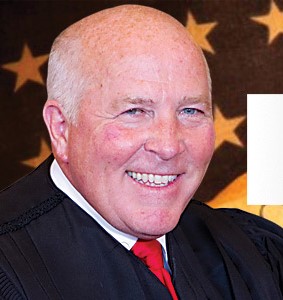
Judge Wheless's court handles civil and criminal cases. He is married to Cynthia McCrann Wheless, presiding judge of Collin County's 417th District Court, which has a juvenile docket.
Born in Abilene, Wheless dropped out of school and joined the Air Force during the Vietnam era. He fixed fighter aircraft in California and came out four years later with a G.E.D. and four years of college under his belt. He got a Bachelor's in Business Administration in California and went to UT Law in Austin. He became an AV-rated specialist in civil trial law and personal injury trial law, served as president of the Plano Bar Association, the Collin County Bar Association, and the Plano Metro Rotary Club. A 35-year Republican Party activist, he was appointed a public member of the State Board of Chiropractic Examiners, a county-court-at-law judge in 2000, a district court judge in 2009. He's been a member of the Texas Parental Rights Advisory Panel. His main claim for preferment is that he established Collin County's first misdemeanor and felony drug courts, is Chair of the Specialized Courts Advisory Council, and is President-elect of the Texas Association of Drug Court Professionals.
This guy is very charming and energetic. I've had two phone conversations with him and enjoyed both of them immensely, Since I interviewed him in July, he has been to more political functions in my home county, Montgomery, than I have. What kind of Court of Criminal Appeals judge would he make? Only God knows. He doesn't have a background as an appellate lawyer nor as a prosecutor nor as a criminal defense attorney.
Houston criminal district judge Mary Lou Keel is the other person in this race with a campaign committee. I intend to have a piece about her at the end of the week
Tuesday, January 6, 2015
Failing to Follow Texas Rule of Civil Procedure 276 Doesn't Stop Reversal and Remand in Sex Offender Failure to Register Case
In a jury trial, the jury is the judge of the facts and the judge is the judge of the law. The main way the law gets to the jury is through a document called a jury charge. Texas Rule of Civil Procedure 271 makes this a right, though waivable. For the great bulk of Texas history, if a jury charge were wrong, the case would have to be retried (Sometimes, because of the rule against double jeopardy, the State would just lose it's chance for a conviction.). Think about it--if the jury charge be wrong, that is, in error about the law, the jury's verdict could never be right. The jury's fact-findings would be inconsistent with the law. Put another way, the jury would be answering the wrong questions or would be answering the questions wrong. These days jury charge form books are prepared by the State Bar, before books like this existed serious conflict between the sides in a trial was common. Now, not so much. In a civil matter, usually both sides submit a proposed jury charge before the beginning of the trial, and the judge marks it up during the trial. The trial has to be fitted to the evidence, and it is the trial itself that determines which issues arise. In criminal matters, the jury charge form books are not finished. There are not standard forms for many crimes. The most common source for criminal jury charge forms is Harris County's jury charge bank. James Publishing's Texas Criminal Jury Charges-- commonly known as McClung's-- is also frequently used. It was the one I used when I was a prosecutor. Usually in a criminal case the prosecutor prepares a proposed jury charge and the defense attacks it, tries to amend it, etc. Courts that are above trial courts tend to think that if a party wants to appeal, it is only fair to the trial judge to have that party show the trial judge in a timely manner (In the real world, it usually means immediately at the time the problem comes up in the trial.). exactly what the party thinks that the judge did wrong and why.
The rules are more complex and burdensome when working to preserve jury charge error. A proposed jury charge written by the judge must be submitted to the parties, and they must be allowed sufficient time to fairly analyze it. After that objections to that charge must either me made in writing or must be read allowed to the court reporter with the judge and all the trial lawyers present, but not the jury. The judge must either sign the written objections that are refused or dictate them to the lawyers in the present of the court reporter. Language that a party thinks was improperly not included in the charge, but be submitted in writing and must be separate from the objections to improper language in the court's proposed jury charge required by Rule 273. Rule 274 required that the charge objections be specific and that suitable reasons for the objections be put in the writings required by Rule 272. If lawyers make so many objections to a jury charge that the valid complaints are obscured by a storm of bogus ones, the appeals court may ignore them all. One also cannot make one or more charge complaints by incorporating other parts of individual complaints made earlier in the document. According to Rule 276, objections either refused or only adopted in part must be so designated and the disposition of them written and signed by the judge.
Two weeks ago this blog showed how the Ninth Court of Appeals in Beaumont reversed and remanded a long-shore personal injury case even though the defense failed to follow these rules for preserving jury charge error. In today's case, the Sixth Court of Appeals in Texarkana, reversed and remand the conviction of a person accused of failing to register as a sex offender.
Sex offender Clister Ray Thomas lived with a girlfriend in an apartment on Houston Street in Longview. The landlord swore out a criminal trespass warning to Thomas, but Thomas didn't move out. He just showed up there late at night and left extremely in the morning. When Thomas was arrested in unrelated matters, he gave jail book-in a false address on Green Street in Longview. Even though Thomas lied then about the address, he was still on the sex offender registry as living on Houston Street, which-- contrary to the landlord's wishes-- was where he was actually living.
Thomas was arrested and convicted of having moved without having changed his registration. Texarkana reversed and ordered an acquittal for insufficient evidence. The State took the case up to the Court of Criminal Appeals, Texas's highest criminal court. There Judge Hervey wrote an opinion joined by Presiding Judge Keller, and Judges Meyers, Keasler and Alcala joined reversing Texarkana, and remanding the case back to them for them to decide if the jury charge error alleged had been harmful Remember Thomas's lawyer had not jumped through the jury-charge error-preservation hoops. Judge Womack concurred without an opinion, and Judge Cochran wrote a dissent, joined by Judges Price and Johnson.
When Texarkana got the case back, it found that Thomas had been egregiously harmed by the jury charge error, which is appeals-court talk for "the error is so bad that we're going to hold for him even though the jury-charge error-preservation rules had not been followed." This answers the CCA majority's question and basically adopts the reasoning of the dissent.
Aren't the bi-statial justices just setting themselves up to get slapped down again? Maybe not. Judge Womack is off the court, replaced by Kevin Michael Yeary. Yeary might join the dissent. Judge Cochran is off to be replaced by David Newell, and Judge Price left to be replaced by Bert Richardson. I don't know, but it would not be an unreasonable guess to think that Richardson might join the dissent, and that at least on one of the majority judges would agree with the Sixth court's jury-charge- harm analysis, thinking that they answered the question put to them by the majority. It is also possible that one or more majority judges would think that the CCA's been messing around this case long enough.
Clister Ray Thomas v. State of Texas (No. 06-13-00046-CR, Dec.30, 2014 ) Tex. App.-- Texarkana (no pet. h.) on remand from No. PD-1326-13, Sept. 24, 2014 (Tex. Ct. Crim. App.) on a petition grant from Aug. 28, 2013 Tex. App.--Texarkana.
Hat tip to the estimable Jim Skelton.
The rules are more complex and burdensome when working to preserve jury charge error. A proposed jury charge written by the judge must be submitted to the parties, and they must be allowed sufficient time to fairly analyze it. After that objections to that charge must either me made in writing or must be read allowed to the court reporter with the judge and all the trial lawyers present, but not the jury. The judge must either sign the written objections that are refused or dictate them to the lawyers in the present of the court reporter. Language that a party thinks was improperly not included in the charge, but be submitted in writing and must be separate from the objections to improper language in the court's proposed jury charge required by Rule 273. Rule 274 required that the charge objections be specific and that suitable reasons for the objections be put in the writings required by Rule 272. If lawyers make so many objections to a jury charge that the valid complaints are obscured by a storm of bogus ones, the appeals court may ignore them all. One also cannot make one or more charge complaints by incorporating other parts of individual complaints made earlier in the document. According to Rule 276, objections either refused or only adopted in part must be so designated and the disposition of them written and signed by the judge.
Two weeks ago this blog showed how the Ninth Court of Appeals in Beaumont reversed and remanded a long-shore personal injury case even though the defense failed to follow these rules for preserving jury charge error. In today's case, the Sixth Court of Appeals in Texarkana, reversed and remand the conviction of a person accused of failing to register as a sex offender.
Sex offender Clister Ray Thomas lived with a girlfriend in an apartment on Houston Street in Longview. The landlord swore out a criminal trespass warning to Thomas, but Thomas didn't move out. He just showed up there late at night and left extremely in the morning. When Thomas was arrested in unrelated matters, he gave jail book-in a false address on Green Street in Longview. Even though Thomas lied then about the address, he was still on the sex offender registry as living on Houston Street, which-- contrary to the landlord's wishes-- was where he was actually living.
Thomas was arrested and convicted of having moved without having changed his registration. Texarkana reversed and ordered an acquittal for insufficient evidence. The State took the case up to the Court of Criminal Appeals, Texas's highest criminal court. There Judge Hervey wrote an opinion joined by Presiding Judge Keller, and Judges Meyers, Keasler and Alcala joined reversing Texarkana, and remanding the case back to them for them to decide if the jury charge error alleged had been harmful Remember Thomas's lawyer had not jumped through the jury-charge error-preservation hoops. Judge Womack concurred without an opinion, and Judge Cochran wrote a dissent, joined by Judges Price and Johnson.
When Texarkana got the case back, it found that Thomas had been egregiously harmed by the jury charge error, which is appeals-court talk for "the error is so bad that we're going to hold for him even though the jury-charge error-preservation rules had not been followed." This answers the CCA majority's question and basically adopts the reasoning of the dissent.
Aren't the bi-statial justices just setting themselves up to get slapped down again? Maybe not. Judge Womack is off the court, replaced by Kevin Michael Yeary. Yeary might join the dissent. Judge Cochran is off to be replaced by David Newell, and Judge Price left to be replaced by Bert Richardson. I don't know, but it would not be an unreasonable guess to think that Richardson might join the dissent, and that at least on one of the majority judges would agree with the Sixth court's jury-charge- harm analysis, thinking that they answered the question put to them by the majority. It is also possible that one or more majority judges would think that the CCA's been messing around this case long enough.
Clister Ray Thomas v. State of Texas (No. 06-13-00046-CR, Dec.30, 2014 ) Tex. App.-- Texarkana (no pet. h.) on remand from No. PD-1326-13, Sept. 24, 2014 (Tex. Ct. Crim. App.) on a petition grant from Aug. 28, 2013 Tex. App.--Texarkana.
Hat tip to the estimable Jim Skelton.
Tuesday, July 15, 2014
If You Like this Blog, Please Tell the ABA for the Blawg 100 Issue.
We're proud of what we do here, and our reporting about candidates for the Texas Court of Criminal Appeals and about the Ninth Court of Appeals in Beaumont show that we are covering things that are otherwise hard to find. Please let the American Bar Association know you like what we do here.
Sunday, January 19, 2014
If Two Candidates Run Without Websites, Will Bloggers Ever Learn about Them?- Fourteenth Court of Appeals
New Houston Fourteenth Court of Appeals Republican Justice Ken Wise has drawn a Democrat challenger, Gordon Goodman. Justice Wise was a commercial litigator before getting to be a trial court judge and then being appointed by Governor Rick Perry to the Fourteenth. He appears not to have a campaign web site up yet. Goodman does not have a campaign web site either. Goodman appears to be an 36-year lawyer who has been working as an oil executive and volunteers with University of Houston.
Three Republicans Line up to Challenge Jim Sharp for his Seat in Houston's First Court of Appeals
We've blogged before about Houston First Court of Appeals Justice Jim Sharp's problem with the Judicial Conduct Commission.

He's a Democrat. He was a solo general practitioner. He's not a particularly bad guy, as Democrats go, and as handsome as a movie actor. The GOP apparently smells blood in the water since three people are competing for the chance to challenge him in the general election:

He's a Democrat. He was a solo general practitioner. He's not a particularly bad guy, as Democrats go, and as handsome as a movie actor. The GOP apparently smells blood in the water since three people are competing for the chance to challenge him in the general election:
- Chad Bridges is head of the Family Violence Division of the Fort Bend County District Attorney's Office. Before that he was First Assistant to the Waller County D.A., and before that, he worked in the Post-Conviction Writ Section of the Appellate Division of the Harris County District Attorney's Office. He was honored by the Crime Victims Response Team of Fort Bend County. He and his wife Claudia are active in the Pecan Grove Gators of the Fort Bend Youth Football League. He was formerly a peace officer and serves on a State Bar Unauthorized Practice of Law Committee. His web site lists important appellate matters he has handled and trials that he has done, which we always like. Apparently a Brookshire resident, he also has the finest looking crew cut I've seen since the '60's.
- Dan Linebaugh, a Baytown small firm lawyer, board certified in personal injury law by the Texas Board of Legal Specialization and in civil trial law by the National Board of Trial Advocacy. He won awards in moot court and mock trial with his work in the excellent South Texas College of Law advocacy program. There's a lot missing here because I could find hardly any campaign information about him conveniently.
- Russell Lloyd was a civil district judge in Harris County in the late '80s and in the '90s, before he got washed out in the Great Blue Wave back then. I don't remember him as an especially good or bad judge back at that time, though then, a little more than now, civil plaintiffs' lawyers were generally treated by the civil bench as loathsome. An Eagle Scout, he was an Air Force veteran, then was an Airborne Ranger in the Army National Guard, and then later a member of the Judge Advocate General's Corps there. As a law student he was executive editor of the American Journal of Criminal Law. He was an Assistant Scoutmaster. He is a life member of the National Rifle Association and has volunteered with the Houston Humane Society. He has been a super-Republican for many, many years- to give you samples of everything that he has done would swamp this part of the post. He's an amateur musician and member of the big Episcopal church in River Oaks. After he was turned off the bench, he has been working on plaintiffs' side with John O'Quinn and had such an unhappy client that he was sued for legal malpractice, but the case was dismissed. He's been married 30 years to attorney Mary Lloyd, and the two of them have two kids, each of whom are lawyers. I think that he has done great service to the Republican Party, that he was not hateful from the trial bench as so many of his colleagues were, that he is highly intelligent and diligent, though maybe more as a politician than a jurist. He's done a very great deal over the decades. Out of all the great multitudes of things that he has done, only one has been seriously questioned and that complaint was eventually dismissed. Seventeen years ago the Texas Supreme Court chose him out of all the state district court judges in the state to try a lawyer discipline case; that's not a job a chump gets.
.jpg)


Who's Running for Texas Court of Criminal Appeals Place Four?
Texas Court of Criminal Appeals Judges Paul Womack-- Place Four-- and Cathy Cochran-- Place Nine-- are retiring at the ends of their terms. So is Judge Tom Price-- Place Three, but we've already discussed the race for his old seat in a previous post. Let's look at the Place Four race here. There are three Republican candidates for Place Four-- no Democrats:
- My friend Jani Jo Wood, nee' Jani Maselli, a name to conjure with in Texas post-conviction law, board certified in criminal appellate law, has the highest rating in the Martindale-Hubble legal directory. In addition to working full-time for Harris County, she's been an adjunct legal writing professor for the University of Houston. She's been honored by the Harris County Criminal Defense Lawyers' Association and the Texas Criminal Defense Lawyers' Association, and she's a former Staff Attorney for the Court of Criminal Appeals. She has given a number of Continuing Legal Education papers and proceedings. She appears to have started her career in one of the greatest starting places for a budding criminal lawyer-- State Counsel for Offenders, Texas's prison public defender office. She was the lawyer who basically invalidated Harris County criminal courts' cost billing system, saving Harris County convicts big bunches of money. She is a very nice lady, and her husband, who appears to have been a Randall County Judge, appears to be a very nice guy also-- he appears to be carrying a great deal of water to support this campaign.
- Kevin Patrick Yeary, a Bexar County Appellate Prosecutor, who started his career as a briefing attorney for Texas Court of Criminal Appeals Judge Bill M. White-- which means that he had been a very good law student, then worked in private practice in a San Antonio general litigation firm, which had some criminal defense work that he had done. After that he did turns as an appellate prosecutor at the Dallas County D.A.'s office and the Harris County D.A.'s office back in the days when they were two of the toughest counties in Texas. Since then, he's been in Bexar County's D.A.'s office. He's taught prospective paralegals at San Antonio College. He's active in his Roman Catholic parish, and for the Encino Park Blue Sharks Swim Team. His wife is a San Antonio pediatrician. He is a very pleasant, gentlemanly, learned person, who caught my originally mistaken post about Richard Dean Davis and told me about it over the phone, for which I am extremely grateful.
- Richard Dean Davis, unfortunately sharing the name of a serial rapist and killer, is a trial and appellate lawyer in the Austin exurb of Burnet of 31 years of experience. He had been a small firm lawyer in Brownsville and in Waco and in Odessa before moving to the Austin area where he eventually ended up with the Burnet practice he has today. He was a special prosecutor, then acting Sherman County Attorney in Stratford in the panhandle and worked in Odessa in the Ector County District Attorney's office and then later in the County Attorney's office, and had an appointment as a special prosecutor when he was at the County Attorney's office. He has been a contract public defender in Burnet. Along with a Travis County Assistant District Attorney, Davis did a jury selection training for his legal alma mater Baylor. He won a "Best Lawyer in Burnet" award in a contest in the local paper. He loves to hunt, but doesn't get as much chance to do it as he would like, and is married to a shy woman. Possessed of a truly beautiful, sonorous radio voice, he is easygoing and humorous in casual conversation.
Subscribe to:
Posts (Atom)